Why my DStv Decoder Not Powering On?
Are you asking yourself, “Why is my DStv not coming on?” This is a common issue and one of the common problems users face with DStv decoders. It can be caused by power failures, decoder malfunctions, remote control problems, or software glitches. In this guide, we’ll help you troubleshoot the issue and find the right solution to get your decoder working again.
If your decoder is not turning on, stuck in standby mode, or showing no signal, follow these steps to identify the cause and fix it. Troubleshooting steps may vary depending on your decoder model, so knowing your specific model is important. When your decoder won’t power on, it prevents you from being able to watch TV or enjoy your favorite shows. If the problem persists, Sat Digital installers are available to help with expert repairs, installations, and signal troubleshooting.
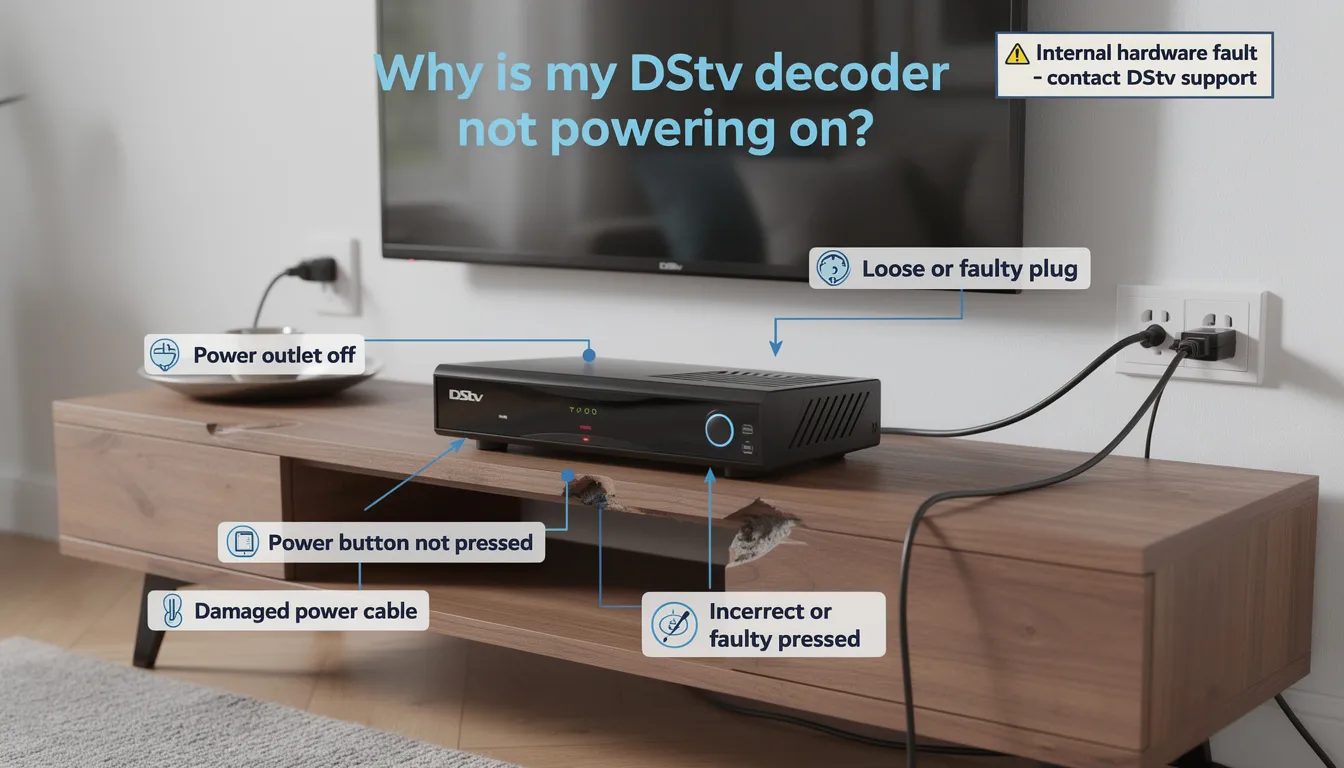
Introduction to DStv Decoder Power Issues
The DStv decoder is an essential device for anyone who wants to enjoy seamless TV entertainment at home or in a business setting. However, encountering DStv decoder power issues can be incredibly frustrating, especially when you’re eager to watch your favorite shows. Power problems are among the most common problems faced by DStv users, but the good news is that most can be resolved with the right solutions. Understanding the basics of how your decoder’s power supply works, and knowing what can cause these issues, is the first step to getting your device back to normal functionality. In this section, we’ll introduce the key factors behind DStv decoder power issues and how you can quickly resolve them to restore your TV viewing experience.
1. Power Issues: Why Your Decoder Won’t Turn On
Power problems are the most common reason why a decoder fails to turn on. A power surge can damage your DStv decoder when power is restored after an outage, especially during load shedding.
Here are some troubleshooting steps to help you identify and fix the issue:
-
Check the power cable: Make sure the power cable is not loose or damaged. Ensure the power cable is firmly plugged into both the wall socket and the back of the decoder to address power issues.
-
Test the power outlet: Plug another device into the same outlet to confirm it is working.
-
Check wall sockets, bypass any power strips or extension cords, and perform a hard reboot by unplugging the decoder for 1–3 minutes before plugging it back in.
-
Look for damaged cables: Inspect all cables for visible signs of wear or damage. If the decoder displays no lights at all, it could indicate an internal hardware defect in the power adapter or the decoder itself.
-
Certain error states may occur due to power issues, such as the decoder not responding or showing error indicators.
Switching off plugs during load shedding and implementing precautionary measures is crucial for protecting your DStv decoder from potential load shedding damage and power surges.
If your decoder still does not power on after these steps, it should be taken to be tested to determine if the device is faulty and whether it needs repair or replacement.
Understanding Power Supply
A reliable power supply is crucial for the normal functionality of your DStv decoder. The power supply unit ensures your decoder receives the consistent power it needs to operate smoothly. If there’s any interruption or fault in the power source, your decoder may fail to turn on or work as expected. Always make sure the power cord is securely plugged into both the decoder and the wall socket to avoid unnecessary power issues. Using a surge protector is also essential, as it helps protect your DStv decoder from unexpected power surges or spikes that could cause permanent damage. By taking these simple precautions, you can help ensure your decoder stays protected and continues to deliver the entertainment you expect.
How to Fix It:
-
Check the power cable – Ensure it’s properly plugged into the wall and the decoder.
-
Test the power outlet – Plug another device into the same outlet to see if it’s working.
-
Try another power source – If you’re using an extension cord, plug the decoder directly into a wall socket.
-
Unplug and wait – Unplug your DStv decoder from the power source and wait at least 1–3 minutes before plugging it back in. This allows the decoder to fully reset.
-
Check for a power surge or tripped breaker – Reset the circuit breaker if necessary.
-
Look for damaged cables – A faulty power supply unit (PSU) may need replacement.
🔗 Related Article: DStv Power Supply Issues & How to Fix Them
Load Shedding and Its Impact
Load shedding is a reality in many areas and can have a significant impact on your DStv decoder. Sudden power cuts and the subsequent restoration of electricity can cause power surges, which may damage your decoder or disrupt its normal operation. To prevent damage during load shedding, it’s essential to switch off your decoder and unplug it from the power source before the power goes out. This simple step helps protect your device from harmful surges when the power returns. Regularly checking your decoder and power connections after load shedding can also help you spot any potential issues early, ensuring your DStv system remains in top condition. Taking these preventative measures is key to protecting your decoder and avoiding unnecessary repairs.
2. Decoder in Standby Mode: How to Turn It Back On
If your decoder is showing a red light, flashing light, or is unresponsive, it may be stuck in standby mode. A solid red light on the decoder often indicates it is stuck in standby mode.
If the decoder remains unresponsive, and shows a red light but does not boot, it may be in a boot loop or error state. Certain error states can cause the decoder to remain stuck in standby mode.
Steps to Fix It:
-
Press the power button on the decoder or remote.
-
Unplug the decoder for five minutes, then wait at least 1–3 minutes before plugging it back in. This waiting period allows the decoder to fully reset.
-
Perform a manual reboot by holding down the power button.
-
If the decoder remains unresponsive, it may require a software update or factory reset.
🔗 Read More: How to Reset Your Decoder
3, Remote Control Not Working
A faulty or unresponsive remote control can make it seem like your decoder isn’t turning on.
How to Fix a DStv Remote:
-
Check the batteries – Replace them with new ones.
-
Make sure the remote is in DStv mode – Press the button.
-
Test with another remote – If another remote works, yours may need replacement.
-
Try using the decoder’s power button – If it turns on manually, the remote is likely faulty.
🔗 Read More: Remote Not Working? Here’s How to Fix It
4. Overheating Decoder: Prevent Shutdowns
If your decoder is overheating, it may shut down automatically or fail to turn on.
How to Prevent Overheating Issues:
-
Turn off the decoder and let it cool down for 15 minutes.
-
Place it in a well-ventilated area to allow heat to dissipate.
-
Avoid stacking other electronics on top of the decoder.
🔗 Learn More: Common Decoder Problems & Solutions
5. Software Glitches & Firmware Updates
A corrupt software update or firmware glitch can cause your decoder to become unresponsive. Like a computer, your DStv decoder relies on software to operate, and software bugs or incomplete updates can lead to malfunctions. In some cases, a corrupt DStv system can prevent the decoder from booting at all. A simple restart of your DStv decoder can often fix minor software-related issues. Updating the software on your DStv decoder can also resolve bugs and improve functionality.
If these steps do not work, you may need to perform a factory reset. Before proceeding, make sure to back up any important data, as a system reset will erase all data, including personalized settings and recordings. Performing a system reset can help resolve various issues, but be aware that it will remove all your customized preferences.
How to Fix Software Issues:
-
Reboot the decoder – Unplug it for five minutes and restart. After plugging it back in, wait patiently while the decoder powers up and completes its reset process.
-
Perform a forced update – Hold the power button while restarting. Wait for the update to finish before using the decoder.
-
Factory reset (last resort) – This will erase all settings, so only use it if necessary. Wait until the reset process is fully complete before setting up your decoder again.
🔗 Step-by-Step Guide: How to Update & Reset Your Decoder Software
6. Signal-Related Issues: When Your Decoder Has No Signal
Signal problems are one of the most frustrating issues DStv users face, often leaving you unable to watch your favorite shows. If your DStv decoder is showing “no signal” or struggling with signal strength, don’t worry—there are several steps you can take to troubleshoot and fix the problem.
How to Diagnose and Fix Signal Problems:
-
Check Signal Strength: Start by accessing the Signal Strength menu on your DStv decoder. If the signal strength is low or missing, this is a clear sign of signal issues.
-
Inspect Cables and Connections: Examine the LNB cable (often a white cable) that connects your decoder to the satellite dish. Make sure it’s securely plugged into the LNB port and not loose or damaged. Loose or faulty cables are a common cause of signal problems.
-
Satellite Dish Alignment: Ensure your satellite dish is properly aligned and securely mounted. Even a slight shift due to wind or accidental bumps can affect signal strength and cause interruptions.
-
Protect During Load Shedding: To prevent damage during load shedding, always switch off the power source and unplug the power cord from your decoder. This helps protect your device from power surges when electricity is restored. Once power is back, plug in the power cord, switch on the decoder, and check if the signal returns.
-
Reset the Decoder: If the problem persists, try restarting your decoder. You can also perform a reset by following the on-screen instructions in the settings menu—just confirm when prompted. This can often restore normal functionality and resolve minor signal issues.
-
Check for Damaged Components: Sometimes, persistent signal problems are caused by a faulty power supply, damaged LNB port, or issues with the satellite dish itself. If you suspect any of these, replacing the affected part may be essential.
-
Replace or Tighten Cables: If you notice the white cable or any other connection is damaged or loose, try replacing it with a new one or tightening the connection. In most cases, this simple fix can restore your signal.
If you’ve tried these solutions and the signal problem persists, it may be time to contact a professional technician. Sat Digital’s expert team can troubleshoot complex signal issues, repair or replace faulty components, and ensure your DStv decoder is working at its best.
Preventative Tips:To avoid future signal issues, regularly check all cables and connections, keep your decoder and satellite dish protected from extreme weather, and always unplug your device during load shedding. Handling your decoder with care and following the manufacturer’s instructions will help prevent damage and keep your system running smoothly.
By following these troubleshooting steps, you can resolve most signal-related problems and get back to enjoying your favorite shows without worry. If you need further assistance, don’t hesitate to contact Sat Digital for professional solutions and reliable support.
Favorite Shows and Decoder Functionality
Your DStv decoder is designed to bring you uninterrupted access to your favorite shows, but power issues can quickly disrupt this essential functionality. When your decoder won’t turn on, it can be both inconvenient and disappointing. To resolve these power-related problems, it’s important to troubleshoot by checking the power cord, power supply, and all connections. In most cases, simply restarting or resetting the decoder can restore normal operation and get you back to watching TV. However, if the problem persists after these steps, it’s essential to contact a qualified technician for further assistance. Prompt troubleshooting and professional support ensure you don’t miss out on your favorite entertainment.
Getting a New One
Sometimes, despite your best efforts, your DStv decoder may be beyond repair and replacing it with a new one becomes the best solution. When getting a new decoder, it’s essential to make sure it’s compatible with your existing satellite dish and LNB port to ensure smooth installation and optimal performance. Carefully follow the on-screen instructions and settings during setup to configure your new decoder correctly. If the issue was related to the power supply or other components, replacing them with new, tested parts can help resolve persistent problems. For a hassle-free experience, consider contacting a professional technician to assist with the installation and setup of your new DStv decoder. This ensures your system is properly configured and ready to deliver the entertainment you love.
6. When to Call a DStv Technician
If you’ve tried all these solutions and your decoder still won’t turn on, you might need professional assistance. Qualified technicians are available to diagnose and repair complex issues with your DStv decoder and system setup. Cape Direct Connect has qualified DSTV installers on standby 24 hours a day to assist with installations, repairs, relocations, and upgrades.
🔗 Book a Technician Now: Repairs & Installation Services
🔗 Related Services:
Conclusion: Get Your Decoder Working Again Today!
If your decoder is not turning on, the issue could be power-related, remote control failure, overheating, or a software glitch. By following the troubleshooting steps in this guide, you can resolve most common issues yourself.
To prevent future problems and ensure optimal performance, perform regular maintenance on your DStv decoder and regularly check the signal strength.
As a final troubleshooting tip, check the smartcard for dirt or misalignment—remove, clean, and reinsert the smartcard to see if this resolves the issue.
However, if the problem persists, your decoder may need repair or replacement. Sat Digital installers are here to help with expert installations, repairs, and troubleshooting services.
📞 Need Professional Help? Call Sat Digital Now! Visit Sat Digital
For official support and account management, visit DStv for the latest updates, self-service options, and customer care assistance.